
Cuba's $18 Billion Secret
Cuba's military conglomerate GAESA holds $18 billion in reserves while the civilian economy collapses, revealing a country that isn't a failed socialist state but a successful military corporation running a failed state as a side business.
The Paradox
Every province in Cuba now faces blackouts lasting most of the day. The average state salary sits at roughly 4,000 pesos a month, about twelve dollars at the informal exchange rate. Meanwhile, a military conglomerate called GAESA operates luxury hotels, marinas, duty-free shops, and import monopolies generating billions in annual revenue. The question is not why Cuba's economy is failing. The question is: failing for whom?
Cuba's GDP contracted approximately 1.9% in 2024, with blackouts lasting up to 20 hours daily
Average state salary of ~4,000 CUP per month equals roughly $12 at informal exchange rates
Military conglomerate GAESA operates luxury tourism, retail, and import monopolies simultaneously
- ECLAC (2025). Preliminary Overview of the Economies of Latin America and the Caribbean 2024
- ONEI (2024). Anuario Estadístico de Cuba
- Economist Intelligence Unit (2025). Cuba Country Report Q1 2025

What Is GAESA
GAESA stands for Grupo de Administración Empresarial S.A. It was founded in 1996 under the direct supervision of Raúl Castro's Ministry of the Revolutionary Armed Forces. Its original mandate was narrow: manage a handful of military-linked businesses to generate hard currency during the Special Period crisis after Soviet subsidies collapsed. By the mid-2000s, GAESA had expanded into tourism through Gaviota S.
A., retail through TRD Caribe and CIMEX, real estate, import-export logistics, and financial services. Cuban economists Pavel Vidal and Omar Everleny Pérez have estimated that entities linked to GAESA control between 50 and 80 percent of Cuba's hard-currency economy. The conglomerate reports not to Cuba's civilian government but to the military command structure. Its finances are not subject to National Assembly oversight.
GAESA was founded in 1996 under Raúl Castro's Ministry of Revolutionary Armed Forces to generate hard currency during the Special Period
GAESA expanded from military businesses to control tourism (Gaviota), retail (TRD Caribe, CIMEX), real estate, logistics, and financial services
Cuban economists estimate GAESA-linked entities control 50-80% of Cuba's hard-currency economy, with no civilian legislative oversight
- Vidal, Pavel and Omar Everleny Pérez (2012). 'La reforma monetaria en Cuba hasta 2016.' In Cuba's Economic Change in Comparative Perspective, Brookings Institution
- Frank, Marc (2013). Cuban Revelations: Behind the Scenes in Havana. University Press of Florida
- Latell, Brian (2005). After Fidel: The Inside Story of Castro's Regime and Cuba's Next Leader. Palgrave Macmillan
The Man Behind the Machine
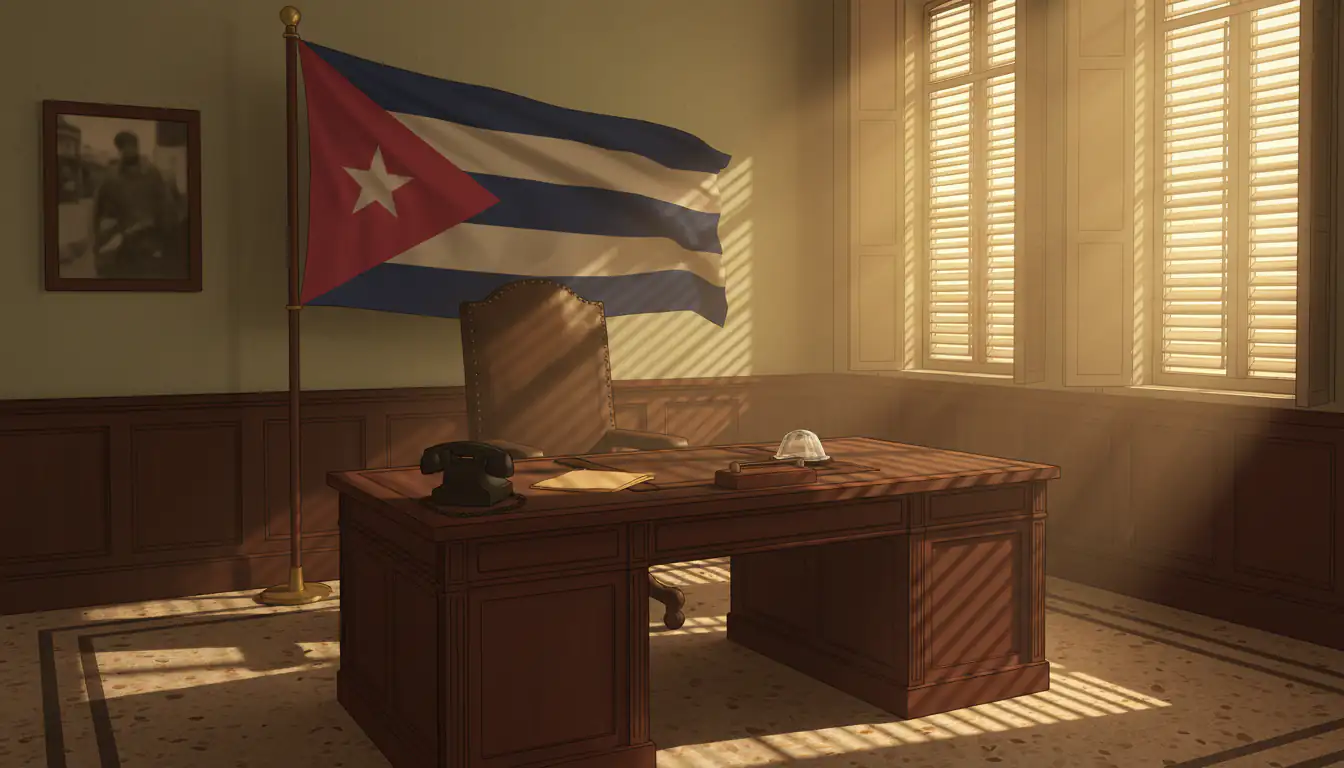
For nearly two decades, GAESA's operational leader was General Luis Alberto Rodríguez López-Calleja, Raúl Castro's former son-in-law. Under his direction, GAESA became the single most powerful economic actor in Cuba. Rodríguez López-Calleja oversaw the Mariel Special Development Zone, managed foreign joint ventures, and controlled the import channels through which consumer goods entered the country. He died in July 2022. His death did not decentralize GAESA's power. If anything, it consolidated it further within the military's senior ranks. The conglomerate's structure is designed to survive any single leader because the institution that created it — the Revolutionary Armed Forces — remains the most cohesive organization in Cuban society.
General Luis Alberto Rodríguez López-Calleja, Raúl Castro's former son-in-law, ran GAESA for nearly two decades until his death in July 2022
Rodríguez López-Calleja oversaw the Mariel Special Development Zone and controlled foreign joint ventures and import channels
GAESA's power did not decentralize after his death — the military institutional structure ensures continuity beyond individual leadership
- Mazzei, Umberto (2022). 'Cuba's Military-Business Complex After López-Calleja.' Latin America Risk Report
- Reuters (2022). 'Cuba's powerful military business chief dies at 62.'
- Sweig, Julia E. (2016). Cuba: What Everyone Needs to Know. Oxford University Press

Follow the Dollars — Tourism
Gaviota S.A., GAESA's tourism subsidiary, operates over 30,000 hotel rooms across Cuba — roughly half the country's total capacity. Before the pandemic, Cuba received about 4.3 million tourists in 2018, generating over $2.9 billion in gross revenue.
The critical detail: tourist spending in Cuba overwhelmingly flows through GAESA-controlled channels. Gaviota hotels, Gaviota tour buses, Gaviota airport services, TRD Caribe gift shops. Even when tourists spend at ostensibly private restaurants, the imported food on the plate likely entered Cuba through a GAESA logistics company. By 2024, tourist arrivals had only partially recovered to roughly 2.6 million, but the market structure remained intact. The military's share of whatever tourism revenue exists has not decreased — the pie shrank, but GAESA's slice stayed the same proportion.
Gaviota S.A. operates over 30,000 hotel rooms — roughly half of Cuba's total capacity
Cuba's 2018 peak of 4.3 million tourists generated $2.9B in gross revenue; by 2024 arrivals recovered only to ~2.6 million
Tourist spending flows overwhelmingly through GAESA-controlled channels: hotels, transport, airport services, retail, and food import logistics
Follow the Dollars — Retail and Remittances
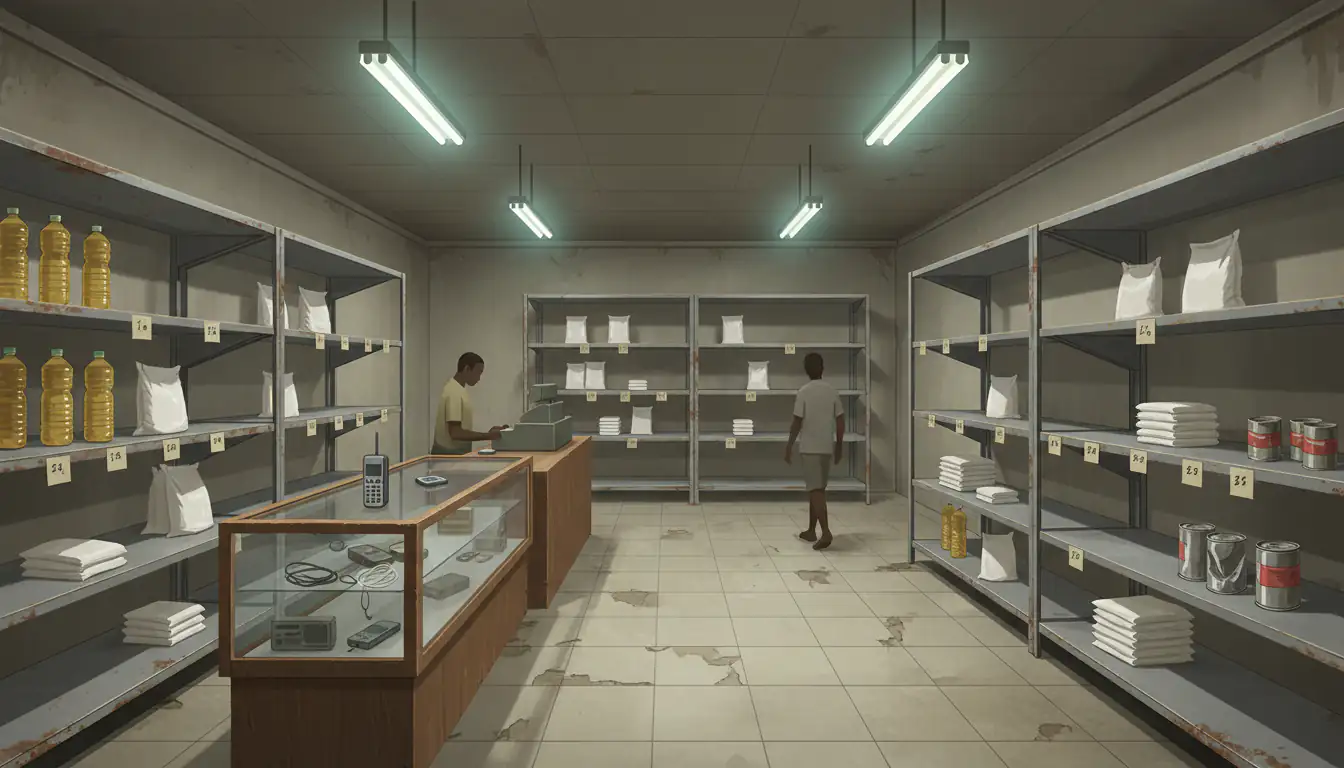
In 2019, Cuba launched MLC stores — shops where goods could only be purchased with freely convertible currency loaded onto magnetic cards. The diaspora sends money. Family members load it onto cards. They buy imported goods at MLC shops. Those shops are operated by TRD Caribe and CIMEX — both GAESA subsidiaries. Remittances to Cuba were estimated at $1.9 to $3.
5 billion annually before tightened US sanctions. Even reduced flows represent the island's largest source of external income after medical services exports. GAESA's retail monopoly means the military captures a significant share of every dollar the diaspora sends home. The family in Miami pays. The family in Havana eats. The military profits on the transaction.
Cuba's 2019 MLC store system channels hard-currency retail purchases exclusively through GAESA subsidiaries TRD Caribe and CIMEX
Remittances to Cuba estimated at $1.9-3.5 billion annually before tightened US sanctions — the island's largest external income source after medical exports
GAESA's retail monopoly captures a significant share of diaspora remittance flows through controlled import and retail channels
- Morales, Emilio (2021). 'Remittances to Cuba.' Havana Consulting Group
- Mesa-Lago, Carmelo (2021). 'The Cuban Economy: Pandemic and Reform.' Journal of Latin American Studies, 53(4)
- US State Department (2023). Cuba Sanctions Policy Review
The Parallel Economy
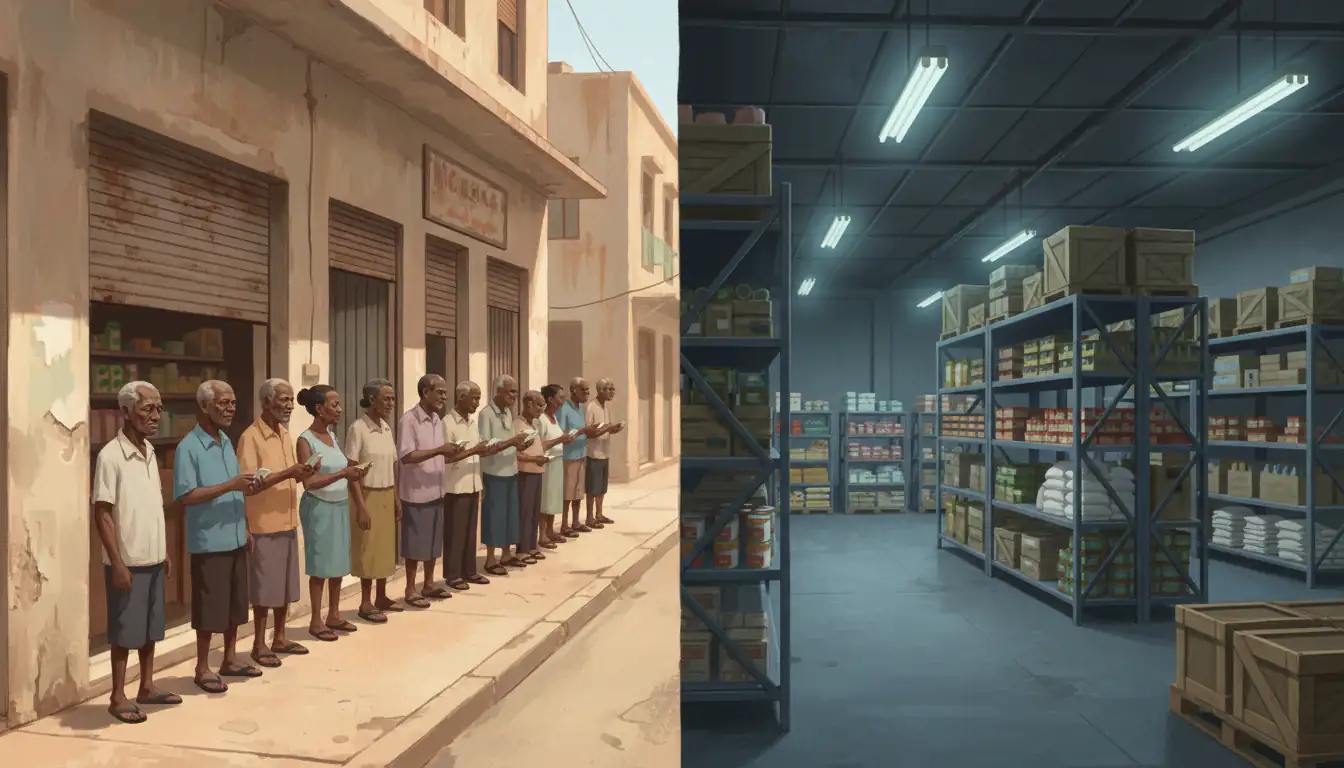
Cuba effectively operates two economies. The peso economy — state salaries, the libreta ration system, subsidized but scarce — serves the general population. The dollar economy — tourism, MLC stores, joint ventures, import monopolies — is controlled almost entirely by GAESA. Economists describe this as a structural dualism more extreme than most developing countries. In a typical dual economy, the modern sector eventually absorbs labor from the traditional sector.
In Cuba, the military-dollar sector has no incentive to absorb the peso economy. It extracts from it. State workers moonlight as taxi drivers or rent rooms to tourists, trying to cross from one economy to the other. GAESA taxes that crossing at every point.
Cuba operates a structural economic dualism: a peso economy (state salaries, ration system) for the population and a dollar economy (tourism, retail, imports) controlled by GAESA
Unlike typical dual economies where modern sectors absorb traditional-sector labor, Cuba's military-dollar sector extracts from rather than integrates the peso economy
Citizens attempting to cross between economies — via taxi driving, room rentals — face GAESA-controlled taxation at every point of entry
- Vidal, Pavel (2022). 'Cuba's Monetary Disorder and the Necessary Reform.' World Development, 150
- Mesa-Lago, Carmelo and Jorge Pérez-López (2013). Cuba Under Raúl Castro: Assessing the Reforms. Lynne Rienner Publishers
- Lewis, W. Arthur (1954). 'Economic Development with Unlimited Supplies of Labour.' Manchester School — referenced as theoretical framework

The $18 Billion Question
Estimating GAESA's total accumulated reserves is inherently imprecise — the conglomerate publishes no financial statements. The $18 billion figure circulated by Cuban exile economists and some analysts draws on cumulative tourism revenues, retail margins, joint venture fees, and real estate holdings over two decades. Other analysts, including those at the Havana Consulting Group, place the figure lower but still in the billions. What is not disputed: GAESA holds substantial hard-currency reserves while the Cuban central bank reports critically low foreign exchange availability. In 2023, Cuba defaulted on Paris Club restructured debt for the second time. The civilian state cannot pay its creditors. The military conglomerate, operating outside the state budget, faces no such constraint.
GAESA publishes no financial statements; the $18 billion reserve estimate is derived from cumulative revenue analysis by exile economists and is contested — but multi-billion dollar scale is broadly accepted
GAESA holds substantial hard-currency reserves while Cuba's central bank reports critically low foreign exchange availability
Cuba defaulted on Paris Club restructured debt a second time in 2023 — the civilian state cannot service debts while the military conglomerate operates outside the state budget
- Morales, Emilio (2023). 'GAESA: The Military's Economic Empire.' Havana Consulting Group Report
- Paris Club (2023). Cuba Debt Status Update
- IMF (2024). Staff assessment referenced in regional outlook — note: Cuba is not an IMF member but data is estimated
- Piccone, Ted (2020). 'The Geopolitics of Cuba's Economic Reforms.' Brookings Institution

Historical Roots — The Special Period Logic
The logic that created GAESA was survival. When the Soviet Union collapsed between 1989 and 1991, Cuba lost roughly 80 percent of its trade virtually overnight. GDP fell by an estimated 35 percent. Caloric intake dropped below 1,800 calories per day. The government needed hard currency and it needed it controlled.
The military was the only institution disciplined enough to manage joint ventures with foreign capital without the corruption spiraling into political fragmentation. This is the origin story GAESA's defenders tell, and it is not wrong — as far as it goes. The problem is what happened next. The emergency measure became the permanent structure. The institution built to save the revolution became the institution that profits from the revolution's inability to reform.
Soviet collapse (1989-91) eliminated ~80% of Cuba's trade; GDP fell ~35%; caloric intake dropped below 1,800 calories/day
The military was chosen to manage foreign joint ventures because it was the most disciplined institution capable of controlling hard currency without destabilizing political fragmentation
The emergency survival measure of military economic management became permanent structure — the institution built to save the revolution now profits from its inability to reform
- Pérez-López, Jorge (1995). Cuba's Second Economy. Transaction Publishers
- Mesa-Lago, Carmelo (2000). Market, Socialist, and Mixed Economies: Comparative Policy and Performance. Johns Hopkins University Press
- ECLAC (1997). The Cuban Economy: Structural Reforms and Performance in the 1990s

Why Reform Doesn't Happen
Here is the structural trap. Any genuine economic liberalization in Cuba — allowing private enterprise to import goods directly, opening tourism to non-military operators, permitting foreign investment without military intermediaries — would reduce GAESA's revenue. The institution that would have to approve reforms is the institution that loses money from reforms. This is not unique to Cuba. Political economists call it a 'selectorate' problem: when the group that keeps the leadership in power is the same group that benefits from the status quo, the cost of reform is regime instability.
Raúl Castro built GAESA. Miguel Díaz-Canel inherited a system where the military's economic power is the guarantor of political stability. Reforming GAESA means asking the armed forces to voluntarily reduce their own wealth and influence. No military in history has done this without external pressure or internal fracture.
Economic liberalization would directly reduce GAESA's revenue — the institution that must approve reforms is the one that loses from them
This is a 'selectorate' problem: the group maintaining leadership power is the same group benefiting from the economic status quo, making reform a regime stability risk
Díaz-Canel inherited a system where military economic power guarantees political stability — no military has voluntarily reduced its own wealth without external pressure or internal fracture
- Bueno de Mesquita, Bruce et al. (2003). The Logic of Political Survival. MIT Press
- Klepak, Hal (2005). Cuba's Military 1990-2005: Revolutionary Soldiers During Counter-Revolutionary Times. Palgrave Macmillan
- Corrales, Javier (2004). 'The Gatekeeper State: Limited Economic Reforms and Regime Survival in Cuba.' Latin American Research Review, 39(2)

The Embargo Paradox
The US embargo is real and its economic cost is significant — ECLAC has estimated cumulative damages exceeding $150 billion over six decades. But the embargo also serves GAESA's interests. It restricts competition. It prevents American hotel chains from entering Cuba's tourism market. It limits direct foreign investment that might bypass military intermediaries.
And it provides the permanent external enemy that justifies internal control. Hardliners in both Washington and Havana benefit from the embargo's continuation. US hawks get to punish a socialist government. GAESA gets a protected market. The people who pay the cost are the eleven million Cubans caught between an embargo designed to create pressure for regime change and a military conglomerate designed to absorb that pressure and profit from it.
ECLAC estimates cumulative embargo damages exceed $150 billion over six decades — the economic cost is real
The embargo simultaneously serves GAESA's interests: restricts competition, prevents American hotel chains, limits investment that might bypass military intermediaries, provides justification for internal control
Both US hawks and GAESA benefit from the embargo's continuation — the cost falls on eleven million Cuban civilians caught between designed external pressure and a military structure designed to absorb it
- ECLAC/Cuba (2023). Report on the Economic Impact of the US Embargo on Cuba — presented annually to UN General Assembly
- LeoGrande, William M. and Peter Kornbluh (2014). Back Channel to Cuba: The Hidden History of Negotiations Between Washington and Havana. University of North Carolina Press
- Spadoni, Paolo (2010). Failed Sanctions: Why the US Embargo Against Cuba Could Never Work. University Press of Florida

International Comparisons — The Military-Business Model
Cuba is not the only country where the military runs a parallel economy. Egypt's military controls an estimated 25 to 40 percent of the national economy through companies that produce everything from cement to bottled water. Pakistan's military conglomerates — Fauji Foundation, the Army Welfare Trust — operate in fertilizer, banking, and real estate. Myanmar's military held economic dominance through UMEHL and MEC before and after its 2021 coup.
The pattern is consistent: military economic power, once established, becomes self-reinforcing. The generals do not need ideology. They need revenue streams. Cuba's distinction is that GAESA's dominance coexists with an official socialist ideology that claims to oppose precisely this kind of concentrated economic power.
Egypt's military controls 25-40% of the national economy; Pakistan's military operates conglomerates in banking, fertilizer, real estate; Myanmar's military held dominance through UMEHL and MEC
Cross-national pattern: military economic power, once established, becomes self-reinforcing regardless of ideology
Cuba's distinction is that GAESA's concentrated economic power coexists with an official ideology that explicitly opposes such concentration
- Siddiqa, Ayesha (2007). Military Inc.: Inside Pakistan's Military Economy. Pluto Press
- Abul-Magd, Zeinab (2017). Militarizing the Nation: The Army, Business, and Revolution in Egypt. Columbia University Press
- International Crisis Group (2022). 'Myanmar's Military Finances.' Briefing Paper

The Human Cost — Emigration as Pressure Valve
Between October 2021 and September 2024, more than 500,000 Cubans were encountered at the US southern border — a staggering figure for a country of eleven million. This is not merely a migration crisis. It is an economic pressure valve. Every person who leaves is one fewer person demanding food, electricity, employment, and political accountability from the state. Remittances from those who leave fund the MLC stores that fund GAESA.
The system has achieved something remarkable in its perversity: it has made emigration profitable for the military. The people who cannot bear the peso economy leave, enter the dollar economy abroad, and send money back through channels the military controls. GAESA does not need its population to stay. It needs them to leave and keep sending money.
Over 500,000 Cubans were encountered at the US southern border between October 2021 and September 2024 — massive for a population of 11 million
Emigration functions as an economic pressure valve: each departure reduces domestic demand for food, electricity, and political accountability
The system makes emigration profitable for GAESA — emigrants enter the dollar economy abroad and remit through military-controlled channels

What Would Have to Change
Three things would have to happen simultaneously for Cuba's economic structure to change. First, the US embargo would have to be lifted or substantially eased, creating competitive pressure on GAESA's monopoly. Second, the Cuban government would have to create legal frameworks for private enterprise and foreign investment that bypass military intermediaries — something Díaz-Canel's 2021 SME reforms technically allow but GAESA's import monopolies practically prevent. Third, the Revolutionary Armed Forces would have to accept a reduced economic role, trading revenue for legitimacy. Each condition is individually unlikely.
Together they are nearly impossible in the current configuration. This is not pessimism. It is structural analysis. The incentive structure rewards every major actor for maintaining the status quo.
Three simultaneous conditions required: embargo lifted to create competitive pressure, legal frameworks for private enterprise bypassing military intermediaries, and FAR acceptance of reduced economic role
Díaz-Canel's 2021 SME reforms technically permit private enterprise but GAESA's import monopolies practically prevent meaningful competition
Each condition is individually unlikely; together they are structurally near-impossible because incentives reward all major actors for maintaining the status quo
- Feinberg, Richard (2023). 'Cuba's New Private Sector: Challenges and Opportunities.' Atlantic Council Report
- Corrales, Javier and Michael Penfold (2011). Dragon in the Tropics: Hugo Chávez and the Political Economy of Revolution in Venezuela. Brookings — for comparative reform failure framework
- Triana Cordoví, Juan (2022). 'Reform in Cuba: Prospects and Limitations.' Development and Change, 53(5)
Realistic Trajectories
The most likely near-term trajectory is continued stagnation with managed decline. GAESA maintains its economic position. The civilian economy continues to deteriorate. Emigration continues to drain the working-age population. The government makes periodic small-scale reforms sufficient to attract marginal foreign investment without threatening military revenue.
A second possibility — destabilization — would require either a severe internal crisis or a shift in US policy significant enough to disrupt the equilibrium. The July 2021 protests showed genuine popular anger but no institutional channel to translate it into political change. A third possibility, gradual reform from within, would require a factional split within the military or a generational transition in military leadership that produces different incentive calculations. As of March 2026, the evidence for any of these scenarios breaking the structural equilibrium remains thin.
Most likely trajectory: continued stagnation with managed decline — GAESA maintains position, civilian economy deteriorates, emigration drains working-age population
Destabilization would require severe internal crisis or major US policy shift; July 2021 protests showed popular anger but lacked institutional channels for political change
Gradual internal reform would require military factional split or generational leadership transition — as of March 2026, evidence for any equilibrium-breaking scenario remains thin
- Sweig, Julia E. and Michael Bustamante (2024). 'Cuba at a Crossroads — Again.' Foreign Affairs
- Hansing, Katrin and Bert Hoffmann (2020). 'When Racial Inequalities Return: Assessing the Restratification of Cuban Society 60 Years After Revolution.' Journal of Latin American Studies, 52(2)
- ECLAC (2025). Preliminary Overview — Cuba section

Reframing the Question
Cuba is routinely described as a failed socialist state. This framing obscures more than it reveals. The socialist economy has indeed failed — inflation, shortages, collapsing infrastructure, mass emigration all confirm this. But the military economy has not failed. GAESA generates hard-currency revenue, maintains its import channels, operates its hotel portfolio, and captures its share of remittance flows.
The state that fails is the one that has to provide for eleven million people. The conglomerate that succeeds is the one that only has to provide for itself. Cuba is not a country with an economic problem. It is two economies — one designed to fail, and one designed to succeed at the other's expense. Understanding the difference is where the real analysis begins.
'Failed socialist state' framing obscures the structural reality: the socialist economy has failed but the military economy has not
GAESA continues to generate revenue, maintain import channels, operate hotels, and capture remittances — it only has to provide for itself, not eleven million people
Cuba is two economies: one designed to fail and one designed to succeed at the other's expense — this distinction is the foundation of accurate analysis