Cuba's Military Starves Its People · Then Asks Them to Die for Them
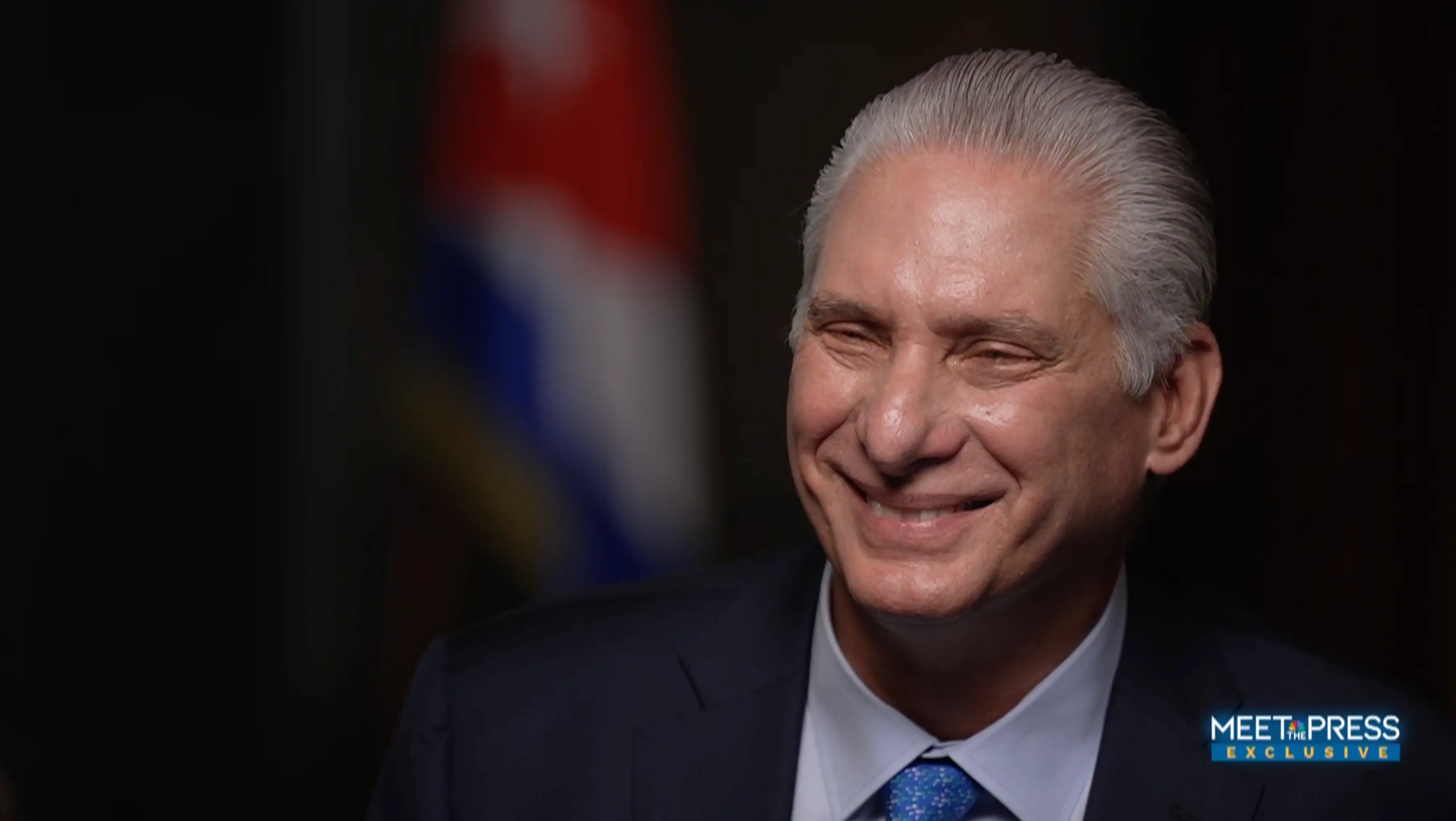
Díaz-Canel told Newsweek Cuba would fight guerrilla war against the US. On NBC, he smiled and couldn't answer whether he'd step down. His military runs 121 empty hotels, manufactures soap, and controls 37% of GDP. His "War of All the People" doctrine forces children into defense drills and was used against peaceful protesters on July 11, 2021. Jonathan Muir is sixteen.
He joined a protest about electricity. He's been in a cell since March 16. The charge: sabotage. The regime pardoned 2,010 prisoners in April. Not a single political prisoner was released.
The Threat
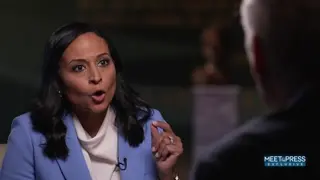
On April 9, 2026, NBC's Kristen Welker sits across from Díaz-Canel in Havana — his first appearance on American television since Fidel Castro in 1959. She asks: would you be willing to step down to save your country? He does not answer. He asks if the question comes from the State Department. He smiles. He speaks through a translator. Six days earlier, in a written interview with Newsweek — no cameras, no video — the same man said this: 'Cuba does not fear war.
We have a defense doctrine called the war of all the people. If military aggression occurs, we will fight back, we will battle, we will defend ourselves. And should we fall in battle, to die for the homeland is to live.' On camera, he deflects. In writing, he threatens guerrilla war and quotes the national anthem. Marco Rubio's response: 'I don't think much about what he has to say.' Since a US military operation captured Maduro in January and killed 32 Cuban military and police personnel, the regime declared a 'State of War' and designated 2026 the 'Year of Preparation for Defense.'
Díaz-Canel's NBC interview — first Cuban leader on American TV since Fidel in 1959 — he deflects when asked if he'd step down
In a separate written Newsweek interview six days earlier, he threatened guerrilla war under the 'War of All the People' doctrine
The contrast: on camera he smiles and deflects, in writing he invokes the mambises and quotes the national anthem
The threat followed the January 2026 US capture of Maduro, which killed 32 Cuban military and police personnel
- NBC News / Meet the Press (April 9, 2026). Kristen Welker interview.
- Newsweek (April 7, 2026). Díaz-Canel full interview, conducted April 3, 2026 at the Presidential Palace.
- CiberCuba (April 8, 2026). Rubio response.
- Infobae (January 18, 2026). Cuba State of War declaration.
The Military That Runs Hotels
The military making this threat has fifty thousand active troops — down from over two hundred thousand. It ranks sixty-fifth globally. Zero operational combat aircraft. MiG-29s: completely out of service. Three hundred tanks from the 1950s through 1970s, mostly in storage. A navy with converted fishing boats. The Defense Intelligence Agency's assessment: 'not capable of effective operations above the battalion level.'
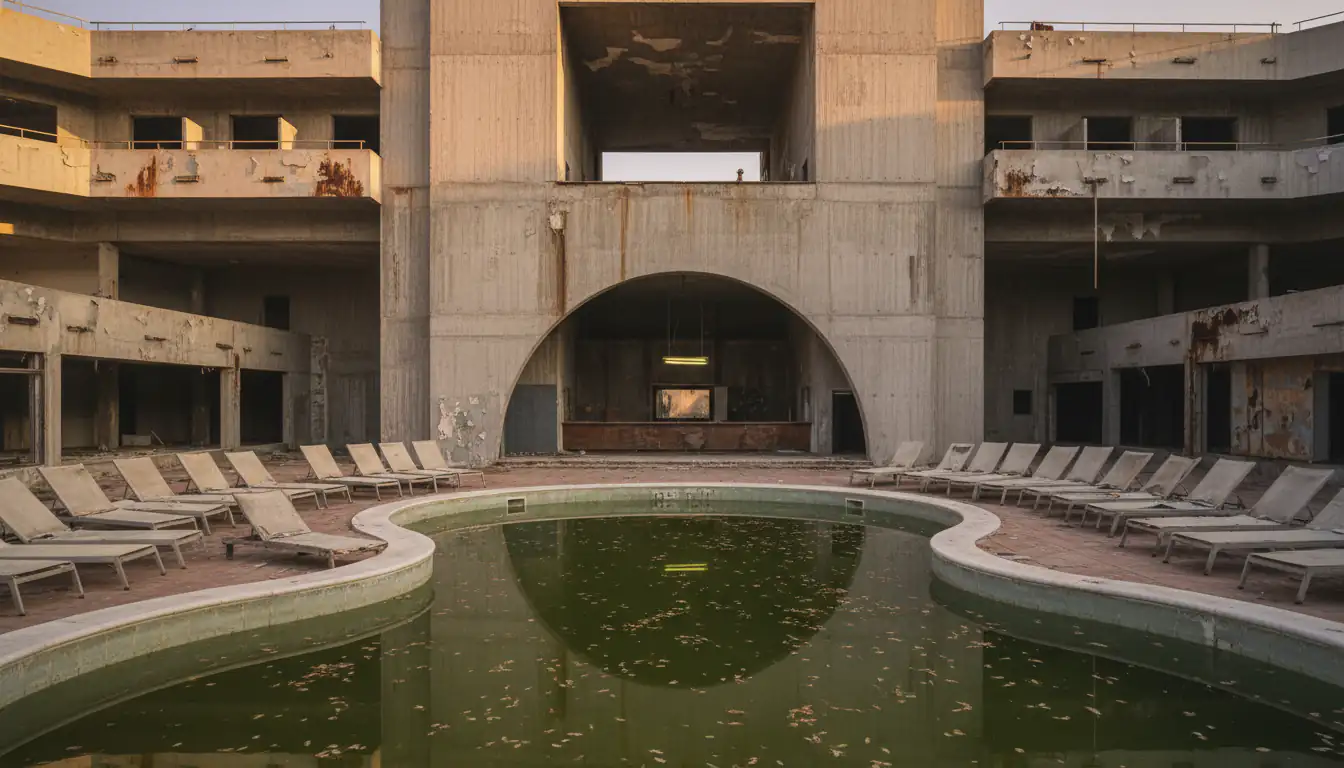
What this military does run: GAESA. A business conglomerate controlling 121 hotels, twenty marinas, supermarkets, gas stations, and a bank. Gross profits: approximately thirty-seven percent of GDP. Revenues 3.2 times the entire state budget. Pays zero foreign currency taxes.
Not subject to audits. Thirty-six percent of all state investment from 2021 to 2023 went to hotel construction — more than eleven times the combined spending on health and education. Hotel occupancy in 2025: 18.9 percent. The military's industrial arm now manufactures soap and furniture. A military that makes soap and runs empty hotels is threatening guerrilla war against the United States.
Cuba's active military has shrunk to 50,000 troops with zero operational combat aircraft, obsolete Soviet tanks, and a navy including converted fishing boats
The DIA assessed Cuba's military as incapable of effective operations above battalion level
GAESA controls 121 hotels, 20 marinas, retail chains, and a bank, with gross profits estimated at 37% of GDP and revenues 3.2 times the state budget
36% of state investment (2021-2023) went to hotel construction — 11 times combined health and education spending
Hotel occupancy collapsed to 18.9% in 2025; the military's industrial arm pivoted to manufacturing soap and furniture
- Global Firepower. Cuba military ranking.
- DIA (1998). Cuba military assessment.
- Columbia University / Pavel Vidal (December 2025). GAESA analysis.
- Global Military. Cuba equipment inventory.
- U.S. State Department (July 2024). Hotel investment vs health/education.
- CiberCuba (March 2026). 18.9% hotel occupancy.
- Global Military. UIM soap/furniture production.
The Machine
The doctrine he invoked is not a slogan. It is a legal system. Ley No. 75 requires 'the organized participation of the entire population.' The 2019 Constitution declares defense 'the supreme duty of each Cuban' and explicitly prohibits conscientious objection.
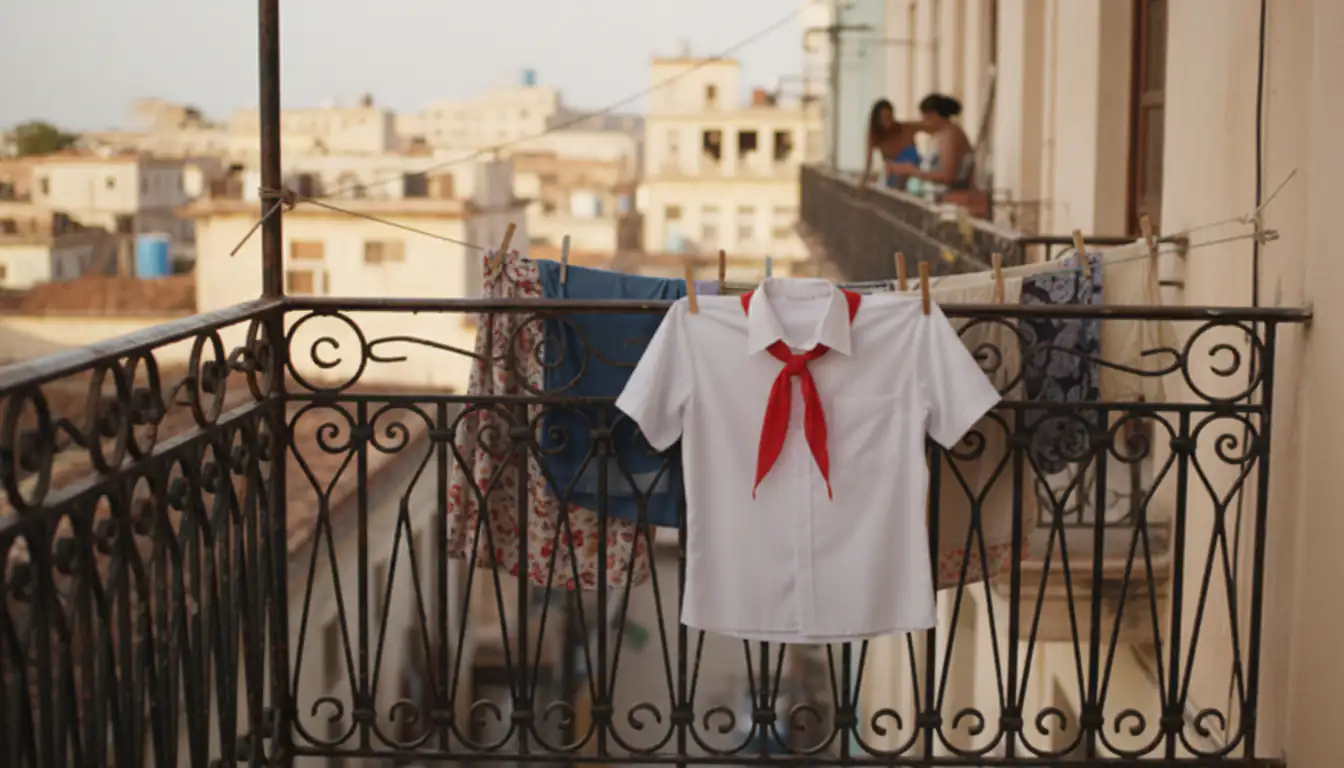
From primary school: mandatory 'pioneer bastions' and shooting circles. From university: a required course called 'Preparación para la Defensa' whose stated goal is to produce graduates 'capable of materializing the War of All the People.' Decreto 103 of 2024 imposes fines of up to 7,000 pesos for failing to register for military service at sixteen. Non-payment within thirty days: criminal proceedings. Self-injury to evade service: six months to five years.
On every block: Committees for the Defense of the Revolution. Roughly eighty percent of the adult population enrolled. Each block president tracks visitors, work patterns, packages. Letters of recommendation from the committee are required for university admission. The US State Department: CDRs are used 'to exercise political control, monitor neighbors, and organize rapid-response mobs.'
Ley No. 75 requires organized participation of the entire population in defense; the 2019 Constitution prohibits conscientious objection
Military indoctrination begins in primary school with 'pioneer bastions' and continues through mandatory university defense courses
Decreto 103/2024 criminalizes failure to register for military service at 16; self-injury to evade service carries up to 5 years
CDRs cover virtually every city block with approximately 80% adult enrollment; block presidents track residents' daily activities
CDR letters of recommendation are required for university admission; the US State Department characterizes CDRs as tools of political control
- MINFAR. Ley No. 75 de la Defensa Nacional.
- EcuRed. Preparación para la Defensa university course.
- Gaceta Oficial. Decreto 103/2024.
- OnCubaNews. Self-injury sanctions.
- MINED. Patriotic education programs.
- U.S. State Department (2023). Human Rights Report — Cuba.
- GlobalSecurity.org. CDR structure and function.
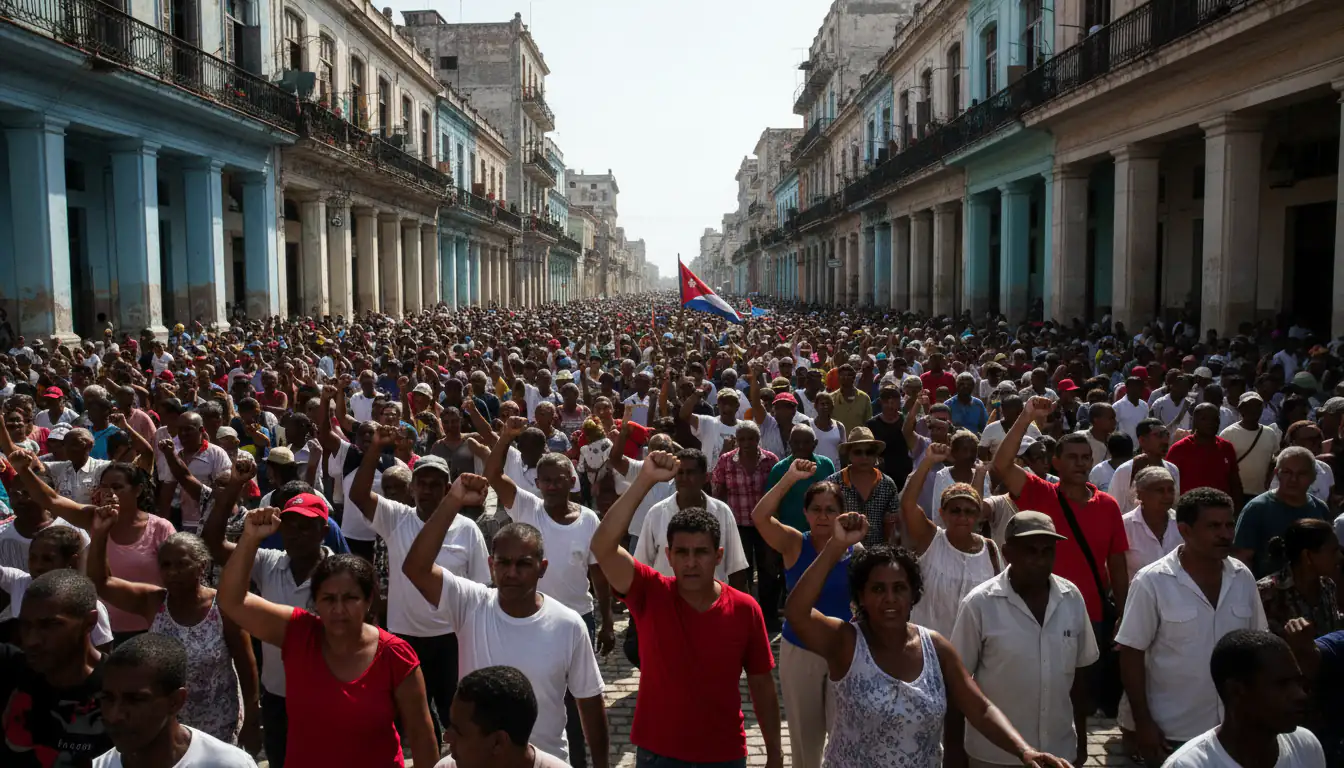
July 11 and Jonathan Muir
The one time this doctrine was activated, it was used against Cubans. July 11, 2021. The largest protests since 1959. Citizens demanding food, medicine, electricity, freedom. Díaz-Canel's response: 'The order to fight has been given.' The framework built for foreign invaders was deployed against the Cuban people. Human Rights Watch documented systematic detention and abuse.
And the doctrine is still being used. Jonathan David Muir Burgos is sixteen years old. The son of an evangelical pastor in Morón. On March 14, 2026, a protest against power outages passed in front of his house. He joined. Two days later, he and his father answered a police summons. His father was released.
Jonathan was not. He is being held at Canaleta prison in Ciego de Ávila — a maximum-security facility. The charge: sabotage. Under Cuban law, that carries up to thirty years, life imprisonment, or the death penalty. For a sixteen-year-old. His father: 'I would have preferred a thousand times to be imprisoned instead of my son.' A habeas corpus petition was rejected.
His father says Jonathan continues to suffer from a chronic and now worsening skin condition, requiring constant medication he is not receiving. US Representatives María Elvira Salazar and Carlos Giménez have demanded his release. The regime pardoned 2,010 prisoners in April. Not a single political prisoner was released. Prisoners Defenders counts 1,214 political prisoners in Cuba as of February 2026. Thirty-one of them are minors.
On July 11, 2021, Díaz-Canel activated the GTP framework against peaceful domestic protesters in the largest demonstrations since 1959
Human Rights Watch documented systematic detention and abuse of protesters
Jonathan Muir, 16, was detained on March 16, 2026 after joining a protest about power outages that passed in front of his house in Morón
He is charged with sabotage, which under Cuban law carries up to 30 years, life imprisonment, or the death penalty
Jonathan's habeas corpus petition was rejected; he is denied medication for his chronic skin condition
The regime's April amnesty of 2,010 prisoners excluded all political prisoners; Prisoners Defenders counts 1,214 political prisoners including 31 minors
- HRW (October 2021). Cuba: Peaceful Protesters Systematically Detained, Abused.
- Cubadebate. Díaz-Canel 'order to fight' broadcast.
- CiberCuba (March 23, 2026). Muir detention details.
- CubaHeadlines. Muir father testimony.
- CiberCuba (March 26, 2026). Habeas corpus rejection.
- CiberCuba (March 26, 2026). Giménez demands release.
- CiberCuba (March 30, 2026). Salazar demands release.
- CiberCuba (April 6, 2026). Amnesty excludes political prisoners.
- Prisoners Defenders (February 2026). Political prisoner count.
- Havana Times (April 6, 2026). Muir still detained.
The People Respond
CiberCuba posted the Newsweek interview to Facebook. Nearly three thousand comments in under twenty-four hours. 'Talking about guerrilla warfare in the 21st century is directly ridiculous.' 'Better worry about the electricity.' 'That guerrilla war would be the people against you yourselves.'
'They want to use the people they've humiliated so much as a shield.' Periódico Cubano: 'The fundamental point is whether the population would want to defend the Castro regime. That population is already aged and tired of broken promises.' 14ymedio reports that Cubans 'prefer anyone — from the US to China or Russia — to administer the country as long as the blackouts end.'
Nearly 3,000 comments on CiberCuba's Facebook post in under 24 hours overwhelmingly mocked the guerrilla war threat
Cuban commenters identified the core contradiction: the regime asks people it has humiliated to fight on its behalf
Periódico Cubano and 14ymedio reported that exhausted Cubans would accept any administration that ends the blackouts
- CiberCuba (April 8, 2026). Social media comments.
- Periódico Cubano (April 2026). Population analysis.
- 14ymedio (April 2026). Reaction piece.
Patria Y Vida
Díaz-Canel invoked the mambises — fighters who freed their slaves, demanded democracy, wrote a constitution with separation of powers, and died so Cuba could be free. His government jails a sixteen-year-old for joining a protest about electricity. José Martí wrote: 'To change masters is not to be free.' The mambises would not have fought for this regime. They would have fought against it.
The mambises fought for independence, abolition, democracy, and constitutional government — the opposite of what the current regime provides
Martí explicitly warned: 'To change masters is not to be free'
The regime's invocation of the mambises to justify its defense doctrine is a historical inversion: the mambises' values condemn the regime that claims them
- InspiringQuotes. Martí: 'To change masters is not to be free.'
- Wikipedia. Mambises historical summary.